




Agentic Economy Briefing
JULY 2026
Welcome to the fourth edition of the Agentic Economy Briefing.
Thank you for joining us as we keep tracking the evolution of autonomous economic systems.
News
This month is defined by two forces pulling in opposite directions: traditional payment networks racing to make agentic commerce production-ready on existing rails, while the crypto-native stack reorganizes around shared, cross-industry infrastructure. Whether these two tracks eventually converge into one interoperable layer, or harden into separate walled gardens, remains the open question.
Open Standard launched Open USD, a consortium-governed stablecoin backed by more than 140 companies spanning banks, payment networks, and crypto infrastructure providers, including Visa, Stripe, Mastercard, BlackRock, and Coinbase. Unlike issuer-controlled stablecoins, Open USD returns most reserve revenue to participating partners rather than to a single issuer. Circle's stock dropped more than 17% the same day, and neither Circle nor Tether are part of the consortium. The move directly targets the single-issuer concentration risk highlighted in reports last month.
coindesk.com/business
➜]
Circle craters 17% as Stripe, Coinbase and BlackRock back rival stablecoin network
AWS CloudFront reached general availability for x402 micropayments on June 15, letting any site behind it charge AI agents per request in USDC. Two weeks later, Cloudflare opened a waitlist for a similar Monetization Gateway. Two hyperscalers shipping the same payment protocol at the edge within weeks of each other signals that agent-to-service micropayments are moving from experiment to infrastructure — though neither has addressed how VAT-style, jurisdiction-based tax rules apply to anonymous stablecoin micropayments.
infoq.com/news
➜]
Circle Launches AI Infrastructure to Power the Agentic Economy

Mastercard extended its Agent Pay program with a version built specifically for machine-to-machine payments: fractions of a cent, executed continuously and without human review. The service supports settlement across cards, accounts, and stablecoins, positioning Mastercard alongside Visa and Stripe in the race to own the rails beneath agentic commerce — though it does little to resolve who is liable when an agent's payment goes wrong.
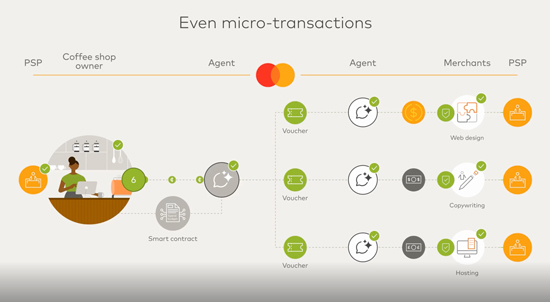
Stripe and Cross River Bank announced bank-grade, single-use card issuance for AI agents, while Stripe cited more than 160 million autonomous transactions cleared through the x402 protocol as of June 2026. The IMF flagged agentic payment liability as a material regulatory gap back in April, and that gap still has no settled answer: existing consumer protection law assumes a human authorizes each transaction.
techtimes.com/articles
➜]
AI Agents Can Now Spend Real Money Autonomously: How Stripe Built the Payment Infrastructure

A rolling adoption tracker found that 'clean' x402 activity on Base sits around 3.1 million transactions over 30 days, while protocol-wide figures that include meme-coin farming activity run as high as 72 million transactions over a similar window. The gap between marketing volume and organic usage is a useful check on any single headline number this space produces — including the ones in this newsletter.
majormatters.co
➜]
The x402 Adoption Tracker
Number of the Month
The number of companies — including Visa, Stripe, Mastercard, BlackRock, and Coinbase — backing Open USD, a new consortium-governed stablecoin announced June 30, 2026 (CoinDesk, American Banker).
It's a striking response to a concern this newsletter flagged last month: nearly all agent payments currently settle in a single stablecoin, USDC. Open USD doesn't resolve that concentration risk on its own, but it signals that the industry's largest players see single-issuer dependency as a problem worth organizing 140 companies to solve. Circle's stock fell more than 17% the day of the announcement — a reminder that this is being read as a competitive threat, not just an infrastructure experiment.
Perspectives
Three pieces of Bit2 research published this month circle one question: how much can a design compromise on its way to market before it stops being that design?
The premise itself is uncompromising. Agentic commerce, as Bit2's principles define it, requires payments that are cheap, scalable, deterministic, irreversible, private, and policy-restricted, all at once, over a decentralized network, properties that usually pull against each other. The principles exist to reject architectures that trade one away for another.
The deployment path is less rigid. Building on an EVM-compatible Bitcoin layer first, instead of natively on Bitcoin, reads like a concession: less decentralization for faster iteration. It isn't framed that way here: staying Bitcoin-aligned doesn't require being Bitcoin-native on day one, only keeping a credible path back. Rootstock offers that path through Union, a bridge whose trust-minimization comes from BitVMX, not an operator's goodwill.
The same tension shows up in how Bit2 treats stablecoins. Compliance and privacy are usually a dial — more of one costs the other. Bit2's answer resembles the relationship between banks and physical cash: compliance enforced at the edges, where value enters and exits, not through surveillance of every transfer between. Selective disclosure, proof of reserves, proof of clean assets each let a user prove exactly what a regulator needs, nothing more.
None of this treats the principles as fixed points, but as what determines which trade-offs are allowed. A deployment chain can change, a compliance requirement can change. What can't, without becoming a different protocol, is what happens to a user's funds when every surrounding service fails at once.
Lower Latency
A space to slow down, read deeper, and sit with ideas worth more than a scroll.
Self-custody is usually treated as binary: you hold the keys, or you don't. This piece argues it's actually three separate guarantees: the ability to keep transacting without anyone's cooperation, the ability to exit to the base layer even if every service provider turns hostile, and the ability to do both when everyone tries to exit at once.
It's not hypothetical: Arbitrum's Security Council has already frozen millions in user funds, and a June 2026 sequencer outage on Base blocked all withdrawals for two hours. The piece walks through how rollups, Ark, and Lightning each hold up, or don't, under exactly that last, hardest condition.
fairgate.io/blog
˙✦
Bit2: You Control Your Funds — No One Else
Thanks for reading this edition of AEB: Agentic Economy Briefing.
Subscribe to stay updated, and we look forward to sharing the next edition with you.