
The real demand question: is infrastructure outpacing the market?
Speaking at Consensus Miami, Chappy Asel, founder of The AI Collective, argued that while AI agents are exactly the type of user crypto always needed — systematic, micro-transaction-native, low-latency — real-world adoption remains limited, with most companies still relying on centralized APIs and traditional payment systems, and agentic payments infrastructure generating little meaningful commercial activity so far. A necessary counterweight to the period's dominant optimism.
coindesk.com/markets
➜]
AI agents could solve crypto’s user problem

Number of the Month
Projected size of the global agentic commerce market by 2030, according to McKinsey (“The agentic commerce opportunity” report) as the industry moves from pilot AI agent programs to full-scale autonomous transaction systems.
Perspectives
Last month we described the shift from programmable payments to autonomous coordination. Now, a clearer picture emerges of what that coordination actually requires.
The articles we published in the past few weeks point to a consistent theme: verification is the missing primitive.
Autonomous agents can transact and coordinate — but for those interactions to compose into reliable economic systems, every payment must leave behind objective, portable evidence that any third party can consume without asking anyone. Without that, every transaction becomes a private event that must be trusted rather than verified. Automation breaks down at exactly the moment it should scale.
Collateral costs, data footprint, throughput, confidentiality — each looks like an isolated metric. Together, they reveal something more fundamental: the infrastructure assumptions inherited from human-scale payments are structurally mismatched with what autonomous agents need.
The agentic economy will require infrastructure designed from first principles for machine actors: verifiable, scalable, and neutral by design.
Lower Latency
A space to slow down, read deeper, and sit with ideas worth more than a scroll.
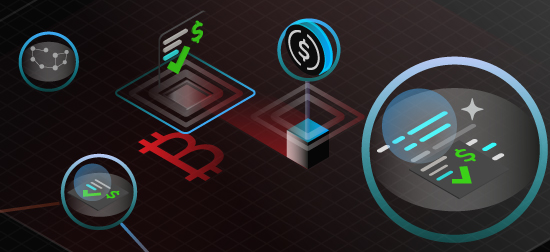
In machine-to-machine commerce, a completed payment means nothing if it cannot be proven.
Autonomous agents acting as arbiters — releasing resources, enforcing penalties, triggering service delivery — need objective evidence they can consume independently, without callbacks or trust assumptions.
This piece explores what verifiable payment proofs actually require, and why most existing systems fall short.
fairgate.io.blog
˙✦
Agentic Commerce Requires Verifiable Payment Proofs