




Agentic Economy Briefing
MAY 2026
Welcome to the second edition of the Agentic Economy Briefing.
Thank you for joining us as we track the evolution of agentic payments and beyond.
Amazon Web Services launched Amazon Bedrock AgentCore Payments, enabling autonomous AI agents to make real-time purchases using stablecoins, built in partnership with Coinbase and Stripe. The first version focuses on stablecoin micropayments for APIs, data feeds and paywalled content, with plans to expand to larger transactions such as hotel bookings and travel reservations. The clearest signal yet that Big Tech is adopting blockchain-based payment rails as native infrastructure for the agentic economy.

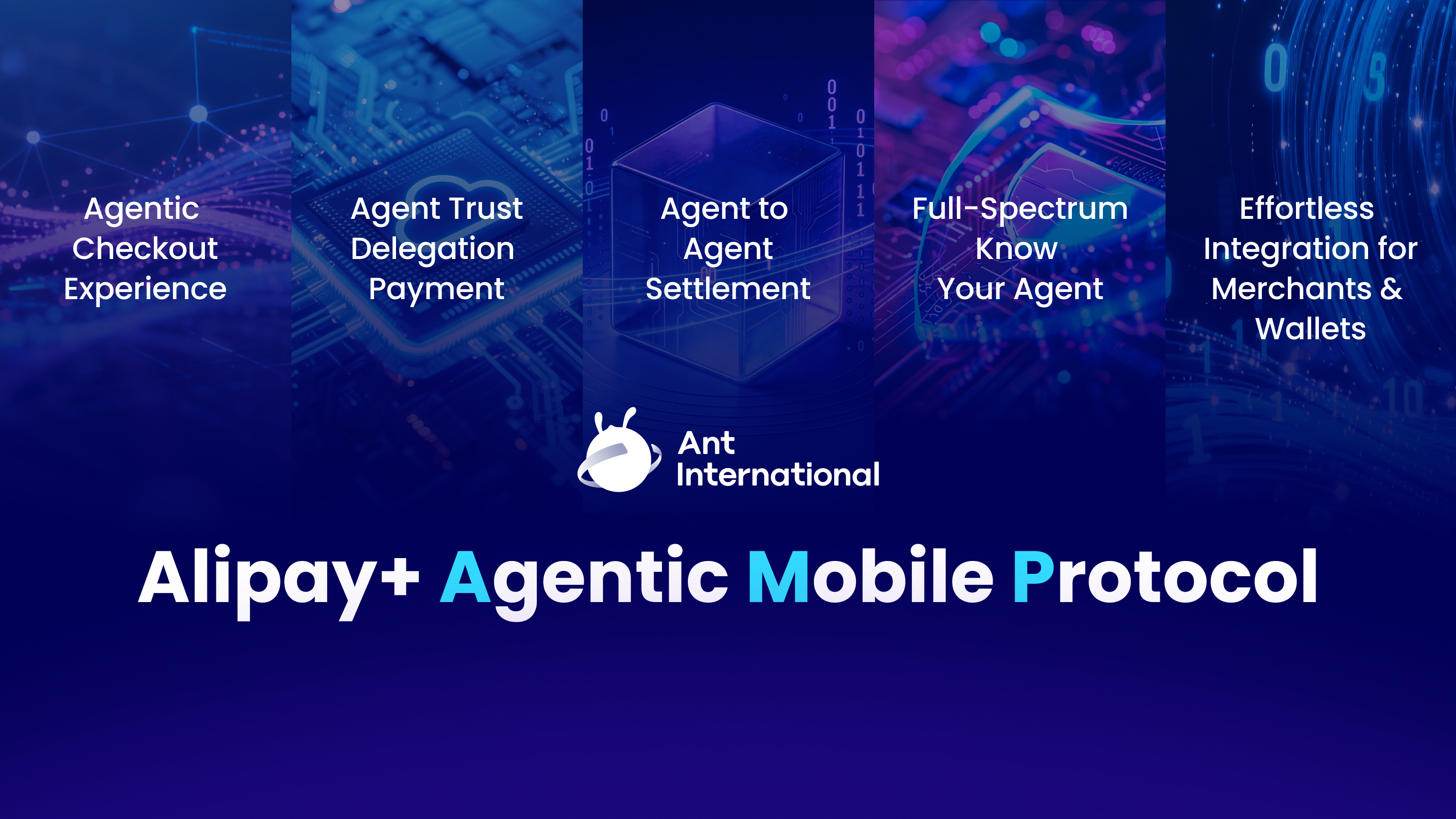
Ant International introduced the Agentic Mobile Protocol (AMP), presented as the world's first agentic payment framework designed for mobile interfaces including digital wallets, super apps and wearables. Fully open-sourced, it enables seamless agentic connection to 4.4 billion digital wallet users worldwide. The framework includes a high-frequency agent-to-agent settlement mechanism for ultra-small automated transactions, and a full-spectrum Know Your Agent (KYA) framework that establishes each agent's digital identity and certifies its authorized capabilities.
businesswire.com/news
➜]
Ant International Launches Open-Sourced Agentic Mobile Protocol to Drive AI Commerce
Anchorage Digital announced its "Agentic Banking" initiative, providing AI systems with compliant access to capital, along with identity, policy enforcement, and settlement capabilities across both crypto and traditional financial systems. CEO Nathan McCauley stated: "We think this is gonna be one of the most important trends of the next decade: this idea that an agentic economy is going to get built."
cryptotimes.io
➜]
Anchorage Bets Big on AI Economy With New Banking Model

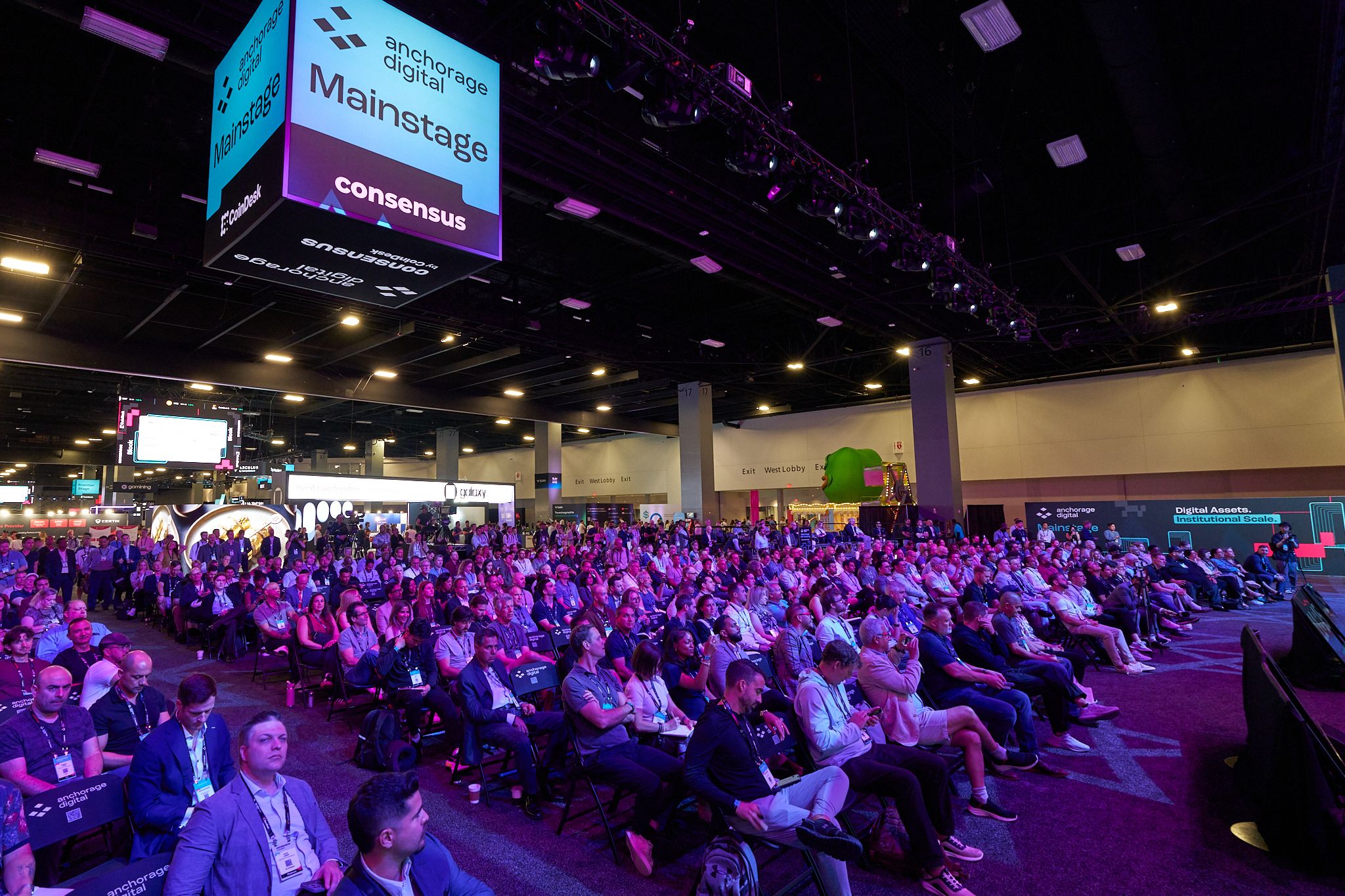
Erik Reppel, founder of the x402 protocol, stated from the Mainstage: "Broadly, the agentic economy is estimated to be $3 trillion to $5 trillion by 2030." Tim Grant, CEO of Deus X Capital, went further: "We're underestimating the agentic payment boom that's about to happen." Agentic commerce was one of the defining conversations of the industry's most important annual gathering.
coindesk.com/business
➜]
Consensus Miami Day 2: Real-time coverage and highlights from on the ground
ClawBank announced that its Manfred AI agent autonomously formed its own corporation in the US, obtaining an IRS Employer Identification Number, an FDIC-insured bank account and a crypto wallet, and can already transact in more than 30 cryptocurrencies. Full autonomous trading is expected by end of May. The case opens unprecedented legal and regulatory questions with no clear framework yet in place.
coindesk.com/tech
➜]
AI agent forms its own company, gets ready to trade crypto

Gemini rolled out Agentic Trading, letting users connect AI models like Claude and ChatGPT to their trading accounts using the MCP open standard — the first agentic trading tool available directly through a regulated US-based exchange. Agents can autonomously monitor markets, place orders and manage risk based on user-defined strategies.
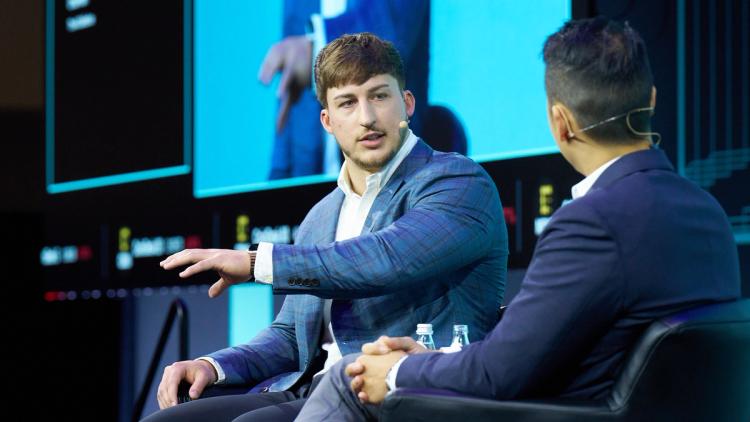
Speaking at Consensus Miami, Chappy Asel, founder of The AI Collective, argued that while AI agents are exactly the type of user crypto always needed — systematic, micro-transaction-native, low-latency — real-world adoption remains limited, with most companies still relying on centralized APIs and traditional payment systems, and agentic payments infrastructure generating little meaningful commercial activity so far. A necessary counterweight to the period's dominant optimism.
coindesk.com/markets
➜]
AI agents could solve crypto’s user problem
Number of the Month
Projected size of the global agentic commerce market by 2030, according to McKinsey (“The agentic commerce opportunity” report) as the industry moves from pilot AI agent programs to full-scale autonomous transaction systems.
Perspectives
Last month we described the shift from programmable payments to autonomous coordination. Now, a clearer picture emerges of what that coordination actually requires.
The articles we published in the past few weeks point to a consistent theme: verification is the missing primitive.
Autonomous agents can transact and coordinate — but for those interactions to compose into reliable economic systems, every payment must leave behind objective, portable evidence that any third party can consume without asking anyone. Without that, every transaction becomes a private event that must be trusted rather than verified. Automation breaks down at exactly the moment it should scale.
Collateral costs, data footprint, throughput, confidentiality — each looks like an isolated metric. Together, they reveal something more fundamental: the infrastructure assumptions inherited from human-scale payments are structurally mismatched with what autonomous agents need.
The agentic economy will require infrastructure designed from first principles for machine actors: verifiable, scalable, and neutral by design.
Lower Latency
A space to slow down, read deeper, and sit with ideas worth more than a scroll.
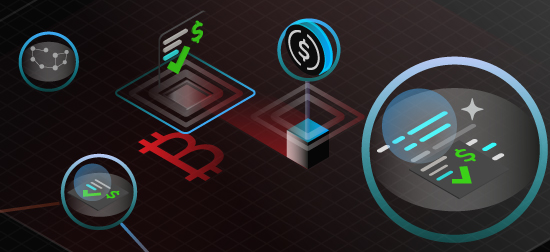
In machine-to-machine commerce, a completed payment means nothing if it cannot be proven.
Autonomous agents acting as arbiters — releasing resources, enforcing penalties, triggering service delivery — need objective evidence they can consume independently, without callbacks or trust assumptions.
This piece explores what verifiable payment proofs actually require, and why most existing systems fall short.
fairgate.io.blog
˙✦
Agentic Commerce Requires Verifiable Payment Proofs
Thanks for reading
Stay tuned, and we look forward to sharing the next edition with you.