




Computing on Bitcoin #85
April 17, 2026 - Week 16
Welcome to a new edition of Computing on Bitcoin Podcast!
Momentum across the Bitcoin ecosystem continues to build, with new architectures, research, and infrastructure expanding the design space.
Here’s a snapshot of the latest developments. Let's dive in.
A new announcement by Rootstock introduces Atlas, a unified interface designed to simplify access to Bitcoin DeFi by aggregating multiple asset routes into a single flow, while highlighting the future integration with BitVMX-powered Union Bridge.
rootstock.io/blog
🔗
Introducing Atlas:The easiest way in to BTCFi
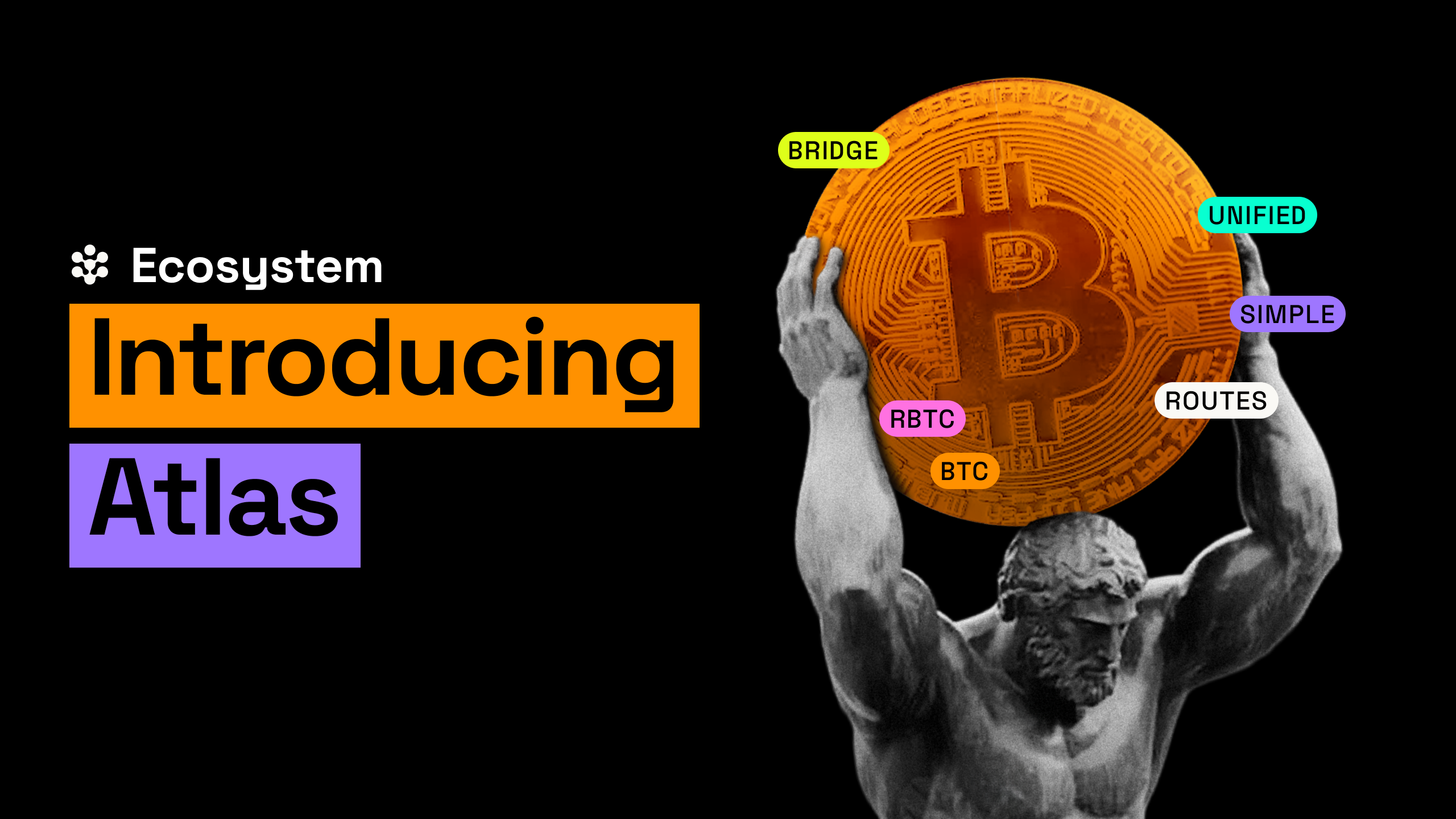
Most Bitcoin today is held, not actively used.
Not because there’s no demand, but because using Bitcoin beyond holding is complex, costly, and dependent on intermediaries where tradeoffs around trust, cost, and control aren’t always clear..
Fairgate released the first edition of its Agentic Economy Briefing, a monthly newsletter covering key developments in agentic commerce, autonomous transactions, and emerging infrastructure. The topics explored connect closely with ongoing work at Fairgate around agentic payments, including systems like Bit2 designed to support high-throughput, deterministic interactions between autonomous agents.
fairgate.io/newsletters
🔗
Agentic Economy Briefing
Welcome to the first edition of the Agentic Economy Briefing.
We track the evolution of agentic payments and beyond.
A new article by Sylvain Saurel discusses BitVM and its approach to enabling complex computation on Bitcoin without modifying the base layer.
gobob.xyz/blog
🔗
Atomic Liquidations for Native Bitcoin Vaults via Onchain Market Making.
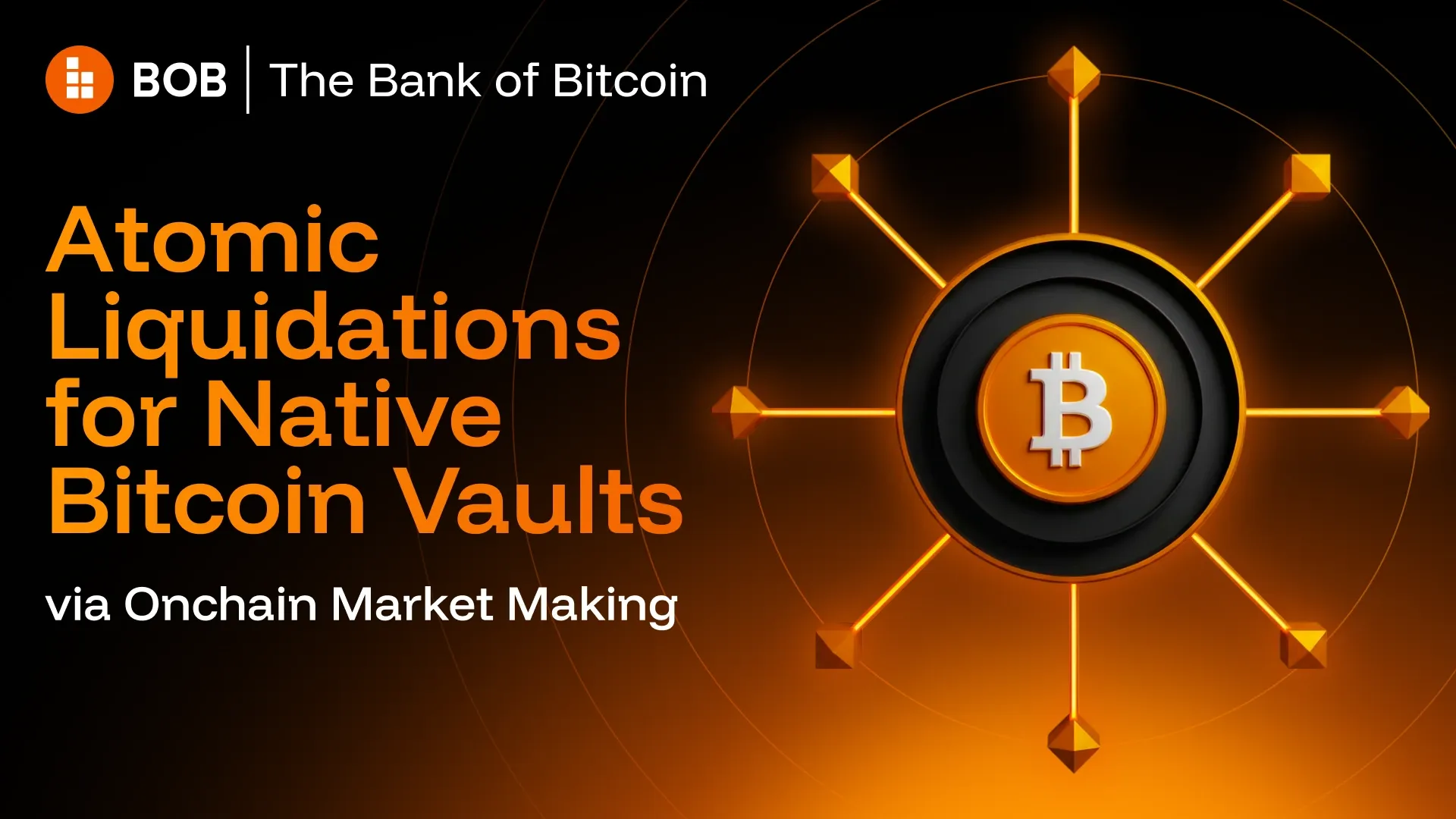
We present a protocol that restores partial and atomic liquidations. Partial liquidations are achieved through setting up parallel spending routes on native BTC vaults to liquidate portions of a vault. Atomicity is unlocked by decoupling liquidator execution from BTC settlement, using an (onchain) market maker (OMM) that borrows bridged BTC (wBTC, cbBTC, …) against vault claims. Flash loan liquidations execute instantly while BTC settlement occurs asynchronously.
A new article by CryptoMinerBros reviews trends in Bitcoin mining sustainability, outlining the increasing use of renewable energy and its role in grid balancing. The piece also references the growth of Layer 2 technologies such as BitVM, noting their impact on transaction fees and evolving miner revenue models.
cryptominerbros.com/blog
🔗
Bitcoin Mining Is Going Green: Why 2026 Is the Year Miners Finally Shed the “Energy Hog” Label

Traditional payment networks were not designed for this environment. Most systems suffer from one or more structural limitations: capital must be locked to route payments, transaction data must be published to the base chain, routing failures are common, or centralized operators become regulatory choke points.
A new report by Tiger Research analyzes Citrea’s approach to Bitcoin L2, highlighting its use of ZK proofs and BitVM to enable verification directly on Bitcoin.
reports.tiger-research.com
🔗
Citrea: Peter Thiel’s One Move on Bitcoin L2
Among a crowded field of Bitcoin Layer 2s, Citrea earned the backing of Founders Fund. This report examines why.
A new paper by StarkWare presents a method for quantum-safe Bitcoin transactions using existing consensus rules, without requiring protocol changes.
github.com
🔗
Quantum-Safe Bitcoin Transactions Without Softforks
Bitcoin transactions are not quantum-safe. The primitive that binds the components of a transaction its inputs, outputs, and spending conditions is an ECDSA signature (pre-Taproot) or a Schnorr signature (post-Taproot), neither of which is post-quantum secure. This means that even spending conditions which are themselves quantum-safe can be subverted: if the signature scheme securing the transaction is broken, the entire transaction including its outputs and other inputs can be forged.
Thanks for reading this edition of Computing on Bitcoin News!
We’ll keep surfacing the most relevant signals and breakthroughs to keep you updated.