




Agentic Economy Briefing
AUGUST 2026
Welcome to the fifth edition of the Agentic Economy Briefing. Thank you for joining us as we keep tracking the evolution of autonomous economic systems.
This edition leans more heavily on x402 than usual, as the protocol had a genuinely eventful month, and it threads through several sections below.
News
This month splits three ways: traditional finance finished institutionalizing x402 governance, Bitcoin shipped its own answer to the dependency that it creates, and the security incidents that piled up all summer got their first hardware-level response.
Coinbase formally handed governance of the protocol it built to a vendor-neutral body. The spec itself is chain-agnostic, but real settlement still runs almost entirely through USDC on Coinbase’s Base — meaning the “permissionless” label describes the protocol, not yet the money underneath it.
.png)
L402 reuses the same dormant HTTP 402 status code but settles over Lightning instead of a stablecoin — no issuer that can freeze a payment, no facilitator in the critical path, and a practical floor near 1 sat versus x402’s roughly $0.01. Distribution, not architecture, is what it’s still missing.
thedefiant.io/news
➜]
Lightning Labs Launches Site for L402 Bitcoin Agent Payments

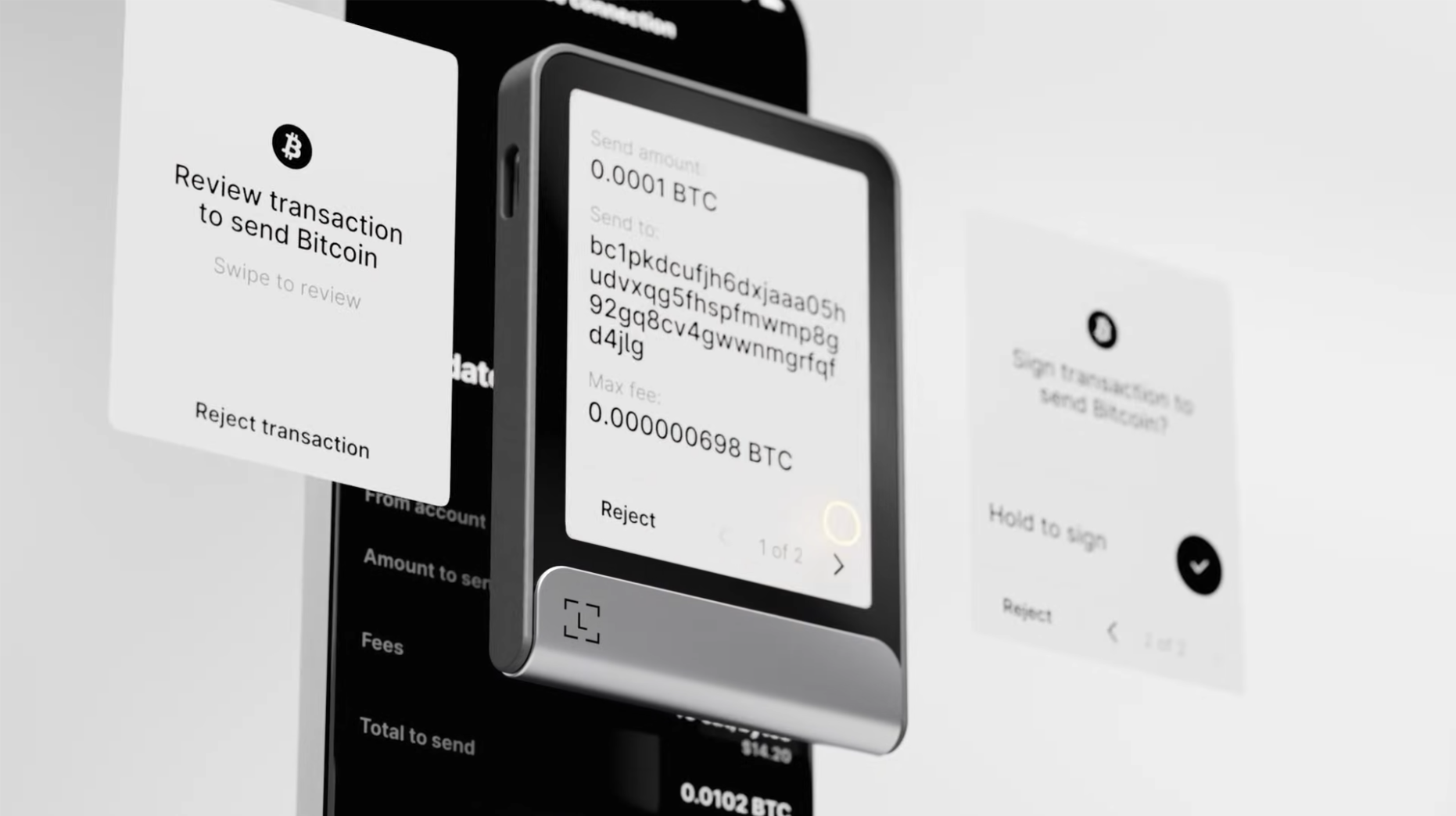
Three documented incidents this year — an NFT that silently expanded a Grok-connected wallet’s permissions, a parsing bug that moved $250K in tokens — drove the point home: software-only agent wallets keep the approval layer inside the same environment the agent can be manipulated in. Agent Stack moves final sign-off to a physical device the agent has no path into.
techtimes.com/articles
➜]
Ledger Launches Agent Stack: AI Proposes, Hardware Enforces the Final Crypto Move
The report frames this as a division of labor rather than a winner-take-all race, with Visa now also backing Open USD alongside Stripe, Mastercard, BlackRock and Coinbase — the consortium stablecoin we flagged last edition.
theblock.co/post
➜]
Visa says stablecoins will power micro-commerce in AI agentic economy

A useful check on the scale of the institutional backing above: forty of the largest payment and tech companies in the world now govern a protocol whose real monthly volume is still a rounding error next to traditional rails.
coindesk.com/tech
➜]
AI agentic payments enter mainstream as Visa, Mastercard, Ripple back x402 standard

Number of the Month
The number of founding members — including Visa, Mastercard, Stripe, Google, AWS, Circle and Coinbase — now governing the x402 Foundation under the Linux Foundation (PYMNTS, Linux Foundation).
What that number doesn’t say: over the 30 days around the launch, the protocol those 40 companies now steward settled roughly $24 million across 75 million transactions — sub-dollar traffic that’s real but still tiny next to the size of the coalition backing it. The gap between governance scale and transaction scale is worth sitting with, especially set against Bitcoin’s own answer, L402, which shipped its own dedicated site two weeks later with no comparable coalition behind it at all.
Perspectives
Two answers to the same question shipped within two weeks of each other this month, and neither claims to be complete.
The question: what stops an autonomous agent with wallet access from doing exactly what it’s told, even when what it’s told is wrong? Three incidents this year made the failure mode concrete: an NFT that silently expanded a Grok-connected wallet’s permissions, a parsing bug that moved a quarter million dollars in tokens. An agent, at each step, doing exactly what it believed the input told it to do.
Ledger’s answer (included in the News section above), shipped this month, keeps the agent as a proposer and moves the final signature to a device it has no path into. It’s a real constraint: hardware in the loop, physically outside the reasoning surface. But it also reintroduces a step an agentic system exists to remove: something has to be there to press the button.
Bit2’s research this month explores the same problem from underneath. Instead of external hardware or a wallet service deciding case by case, spending policies: rate limits, merchant whitelists, thresholds that require human sign-off live as cryptographically enforceable logic inside the user’s own wallet. No third party holds custody, no hardware step interrupts autonomy; the constraint is written into the funds themselves before the agent ever touches them.
Neither approach eliminates the risk that started this: an agent will still act on a bad instruction. What changes is where the leash sits, and who’s holding it when it snaps. A device in a drawer, a policy written once and enforced automatically, or, still, whoever controls the wallet-as-a-service in between.
The answers aren’t equivalent, and this month’s shipping schedule made the differences concrete rather than theoretical.
Lower Latency
A space to slow down, read deeper, and sit with ideas worth more than a scroll.
HTTP has reserved status code 402 for thirty years without a real reason to use it. This piece walks through what changes when Bit2 sits underneath it: a paywall that settles with a zero-knowledge proof instead of a payment processor — no account, no channel kept open, no third party deciding whether the money is real.
It’s a practical companion to the x402 story running through this edition — same protocol most of the industry is standardizing around, but a settlement layer where the receiver never has to trust the rail it’s built on.
fairgate.io/blog
˙✦
Paywalls for the Agentic Web: Building an x402 Service on Bit2
Thanks for reading this edition of AEB: Agentic Economy Briefing. Subscribe to stay updated.
We look forward to sharing the next edition with you.