




Computing on Bitcoin #75
February 06, 2026 - Week 06
Welcome to a new edition of Computing on Bitcoin News. The ecosystem keeps evolving rapidly, as the landscape becomes more dynamic.
This edition brings many fresh updates on BitVM2, spotlighting the builders and protocols pushing toward scalable, trust-minimized infrastructure.
GOAT Network announced the launch of its BitVM2 testnet alongside the Genesis Pioneer Campaign, inviting the community to explore cross-chain interactions anchored by Bitcoin’s security guarantees.
goat.network/blog
🔗
BitVM2 Genesis Pioneer Campaign: Phase 1 - Cross-Chain Explorer

GOAT Network’s L2 design uniquely incorporates the full stack (no outsourced components):
· Type-1 zkEVM execution for unparalleled DevX
· A custom-built zkVM/proving layer for verifiable execution
· A decentralized sequencer path for liveness and shared network ownership
· An advanced BitVM2 settlement design to make exits and disputes enforceable by Bitcoin with minimal trust assumptions.
A new forum post on Blockeden analyzes the current state of Bitcoin Layer 2s, comparing Lightning, Stacks, BitVM-based designs, and ZK rollups in terms of scalability and trust assumptions.
blockeden.xyz/forum
🔗
Bitcoin Layer 2s Are Exploding - But Can Any of Them Scale?
Bitcoin Layer 2s are having a moment. Citrea just launched the first production ZK rollup on Bitcoin. BitVM is enabling fraud proofs without consensus changes. Stacks is maturing into real DeFi infrastructure. Lightning hit an all-time high capacity of 5,637 BTC.
But here’s the uncomfortable truth: total Bitcoin L2 TVL has dropped 74% from its peak. Only 0.46% of all Bitcoin sits in Layer 2s. Node counts are declining even as institutional capital flows in.
Selfdriven published an overview of its activity and growth financing model, outlining how Bitcoin capital can be activated via Taproot, BitVMX, and related protocols.
selfdriven.finance
🔗
Activity & Growth Financing for Self-Actuating Communities
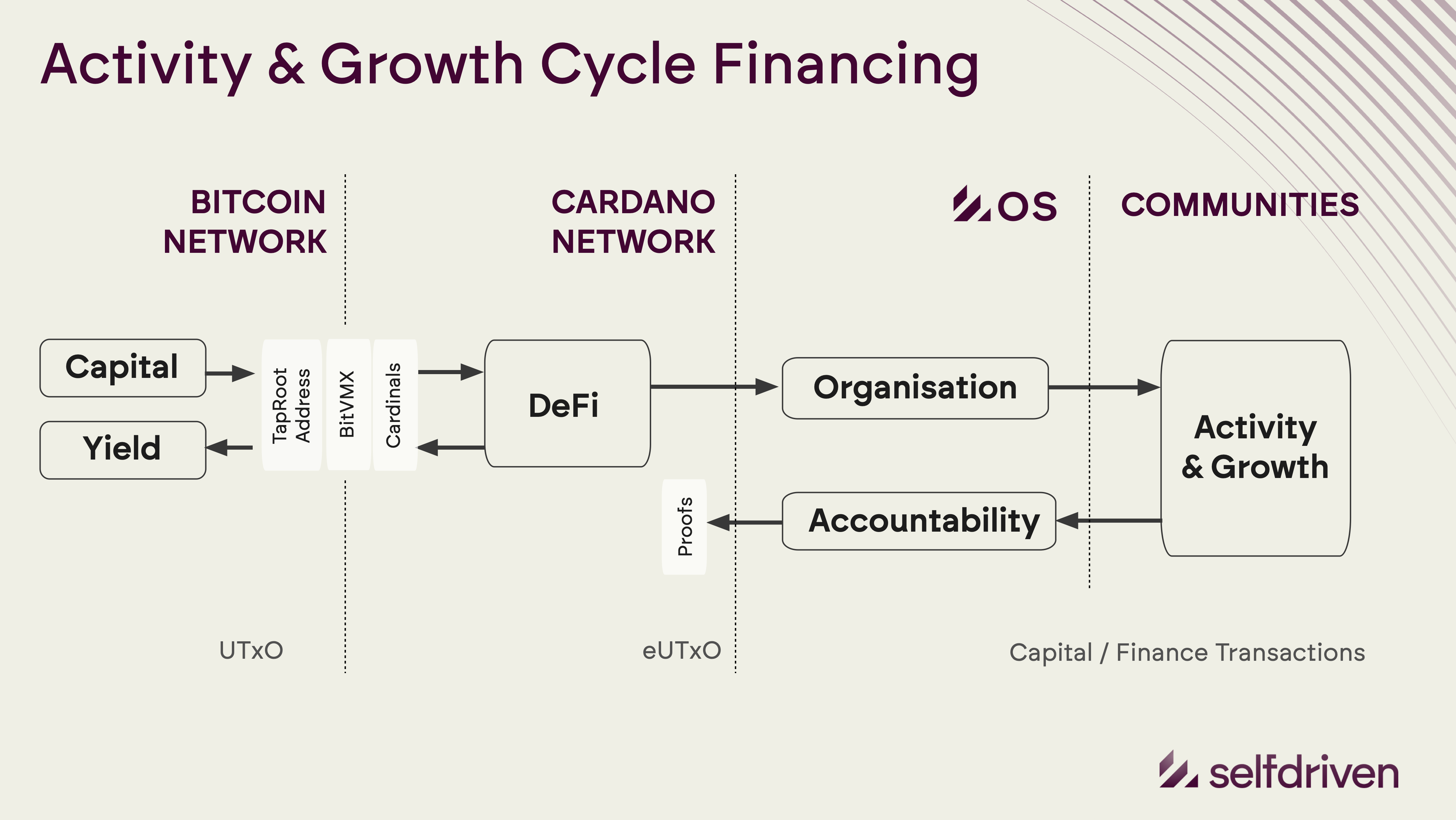
selfdriven.finance connects Bitcoin (permissionless capital) and Cardano (permissionless DeFi) to power community-driven growth.It channels long-term crypto capital into local, purpose-aligned initiatives — turning yield into impact.
Bitcoin News shared remarks by Charlie Hu at Bitcoin MENA on Bitcoin’s security characteristics and the lack of native yield, reinforcing the need for new capital efficiency models and L2 innovation.
Bitcoin is the world’s most secure network—but it has no native yield.
— Bitcoin.com News (@BitcoinNews) January 29, 2026
Charlie Hu explains why Bitcoin L2s like Bitlayer bring programmability + sustainable DeFi yield without compromising Bitcoin security. Live at Bitcoin MENA.@graminitha1 x @CharlieHusats@bitcoinmenaconf pic.twitter.com/QOV0ZkN1ey
GOAT Network published version 1.0 of its BitVM2 whitepaper, presenting a native Bitcoin settlement design for zkRollups with trust-minimized withdrawals and improved capital efficiency.
goat.network/blog
🔗
GOAT BitVM2: Native Bitcoin Settlement
.jpg)
The BitVM2 protocol is often regarded as one of the most secure bridge frameworks for Bitcoin and its side-systems. However, it still faces challenges in a real-world zkRollup setting and deployment, such as the inability to support arbitrarily sized withdrawals, inconsistent challenge incentives, potential double-spending attacks by operators, and large on-chain data for dispute resolution.
Thanks for joining us in this week’s roundup of Bitcoin news.
We’ll continue tracking the builders turning ideas into programmable Bitcoin reality.
See you next week!
-The Fairgate Team