



Computing on Bitcoin #103
August 21, 2026 - Week 34
Welcome to a new edition of Computing on Bitcoin News.
Bitcoin Computing keeps moving forward, bringing together new research and infrastructure advances.
Here's our curated selection of this week's most relevant developments.
Let's dive into this week's highlights.
A new paper by Mikhail Sergeevitch, Konrad Staniec, David Tse, Nikhil Vanjani, and Robin Linus proposes a non-interactive translation of Winternitz signatures to Lamport signatures via secret sharing, aiming to shrink the on-chain footprint of BitVM3 and BABE.
iacr.org/news
🔗
Non-Interactive Translation of Winternitz Signatures to Lamport Signatures via Secret Sharing
BitVM2 brought arbitrary program execution to Bitcoin, yielding the first light-client-based bridge to its second layers and reducing the trust required at setup to a single honest participant. Its successors, BitVM3 and BABE, move the disputed computation off-chain into Garbled Circuits (GCs), cutting worst-case on-chain dispute costs by roughly three orders of magnitude and so opening participation beyond well-capitalized operators; BABE in turn cuts the off-chain storage and setup costs of BitVM3's garbled circuits by a comparable factor.
A blog post by Kevin Wahle from FairgateLabs describes a Rust library that coordinates Bitcoin transaction broadcasting for BitVMX, handling reliable broadcast, on-chain tracking through confirmation depth, and automatic fee bumping via Child Pays For Parent and Replace By Fee, while reporting state transitions through a structured event stream.
bitvmx.org/knowledge
🔗
A Bitcoin Transaction Coordinator

Signing a Bitcoin transaction and handing it to a node is the easy part. Driving it all the way to a durable confirmation is the hard part.
GOAT Network launches a $5,000 bug bounty for BitVM3, its implementation of a trust-minimized Bitcoin bridge intended to enable interoperability between Bitcoin and GOAT Network, inviting security researchers to identify vulnerabilities in the protocol.
goat.network/news
🔗
GOAT BitVM3 Bug Bounty Campaign

GOAT Network launches a $5,000 BitVM3 Bug Bounty, inviting security researchers and developers to identify vulnerabilities and strengthen its trust-minimized Bitcoin bridge.
Bitcoin has earned its reputation as the world's most secure blockchain through simplicity, transparency, and relentless public scrutiny. Any infrastructure built around Bitcoin should be held to the same standard.
A report highlights several catalysts supporting Cardano, including potential spot ETF eligibility, DeFi growth, scalability upgrades, and interoperability, while also noting major efficiency improvements to its BitVM-powered Bitcoin bridge.
thecryptobasic.com
🔗
Catalysts Keeping Cardano Investors Bullish Despite Recent ADA Price Declin
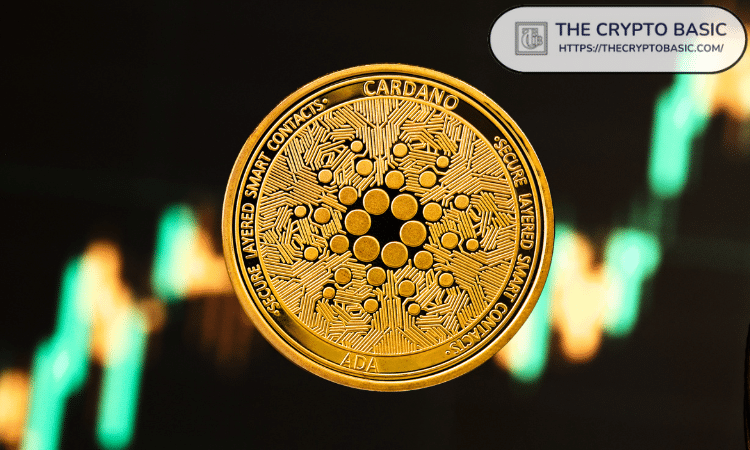
One of the biggest catalysts is Cardano’s eligibility for a potential spot ETF in the United States. Although Grayscale dealt ADA investors a setback by withdrawing its S-1 application for a Cardano ETF last week, the token subsequently met a key eligibility requirement under the SEC’s streamlined spot ETF review framework.
Thanks for reading! That wraps up this week's edition of Computing on Bitcoin News.
We hope you found it useful and look forward to bringing you more of the latest developments next week.
The Fairgate Team